Danube — Smederevo, Viminacium, Golubac & Lepenski Vir
10,000 Years Along the Danube — Medieval Fortresses, Rome & Europe’s Oldest Settlement
- Follow the Danube east from Belgrade through one of the most historically layered river corridors in Europe — a 15th-century fortress capital, a Roman legionary city of 40,000 people, a medieval castle at the entrance to Europe’s deepest gorge, and a prehistoric settlement 9,500 years old
- Viminacium is the largest Roman excavation in Serbia, with a reconstructed amphitheatre, mausoleum frescoes, and a mammoth skeleton found on site — one of the most impressive archaeological parks in the Balkans
- Lepenski Vir predates Stonehenge and the Egyptian pyramids — the unique stone sculptures found here are still in situ on the Danube bank, exactly where they were carved 9,500 years ago
Highlights
- Walk the walls of Smederevo Fortress — one of the largest medieval fortresses in Europe, last capital of the Serbian Despotate
- Explore Viminacium — the largest Roman excavation in Serbia, with amphitheatre, mausoleum frescoes, and a mammoth skeleton
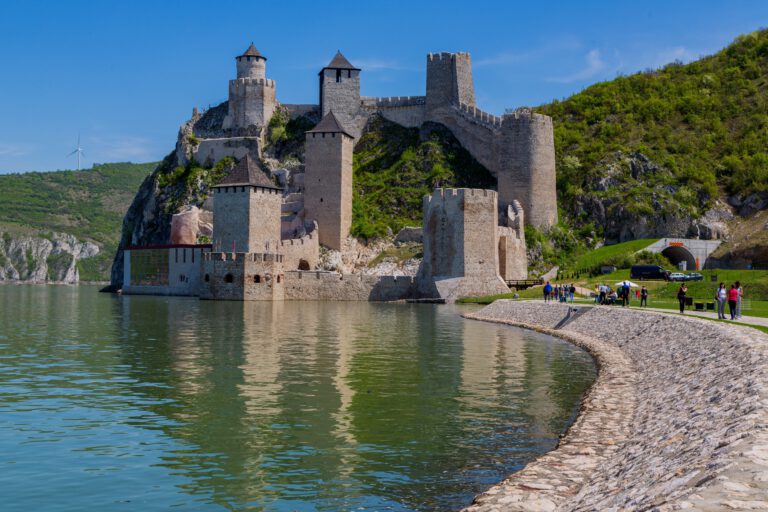
- Walk the towers of Golubac Fortress — one of the most dramatically positioned medieval castles in Europe, at the entrance to the Đerdap gorge
- Visit Lepenski Vir — a 9,500-year-old Mesolithic settlement with unique prehistoric sculptures, still in situ on the Danube bank
- Lunch included near Golubac — Danube fish specialties from the local river-cooking tradition
- Follow 10,000 years of Danube history in a single day
- Small group format — private car for 1–4, minibus for 5–16
About This Tour
The Danube east of Belgrade is one of the most historically layered river corridors in Europe. Within 200 kilometres, the river passes through the last capital of medieval Serbia, a Roman provincial city of 40,000 people, a medieval fortress guarding the entrance to the deepest gorge in Europe, and a prehistoric settlement older than anything in Egypt or Mesopotamia. The Danube day tour follows this corridor from Belgrade and back — a full day along one of the great rivers of the ancient world.
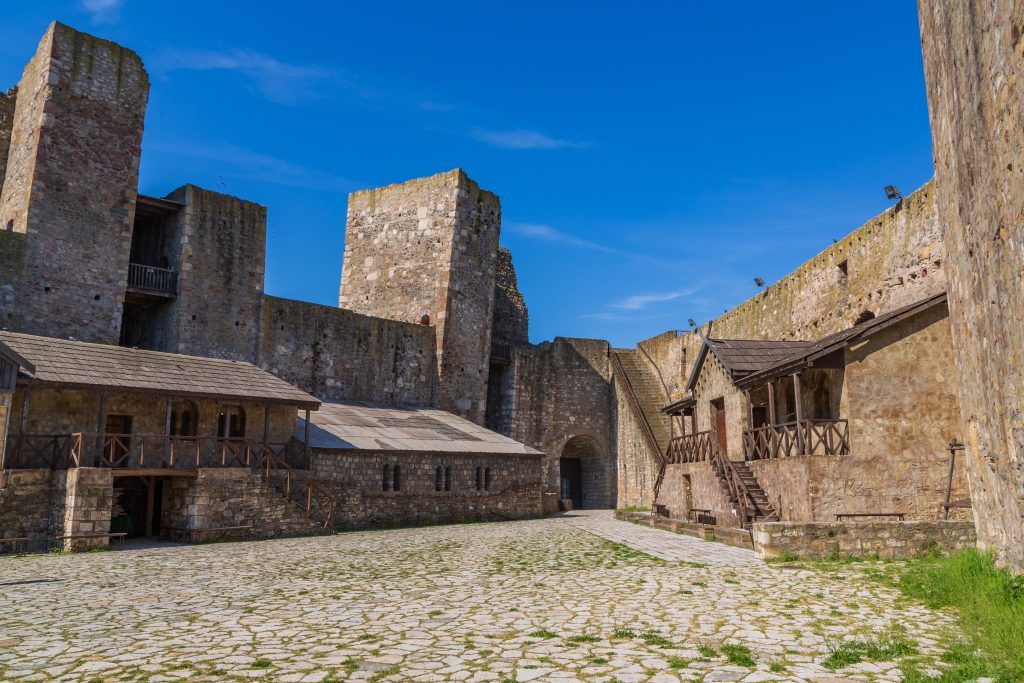
The day opens at Smederevo Fortress, just an hour from Belgrade but rarely visited by international tourists despite being one of the largest medieval fortresses in Europe. Built in the 15th century by Despot Stefan Lazarević and his successor Đurađ Branković as the last capital of the medieval Serbian Despotate, Smederevo’s three kilometres of walls and 25 towers encircle what was once an entire walled city on the Danube bank. Walking inside the walls, with the river visible through the ruined towers, gives an immediate sense of the scale of the Serbian medieval state in its final decades before the Ottoman conquest.
Viminacium comes next. At its height it was a city of 40,000 people: a legionary fortress, a civilian settlement, bathhouses, an amphitheatre, temples, and cemeteries stretching across the plain. Today it is the largest archaeological site in Serbia, with ongoing excavations, reconstructed buildings, and a museum that includes a mammoth skeleton — a reminder that humans were living along this Danube bank long before the Romans arrived.
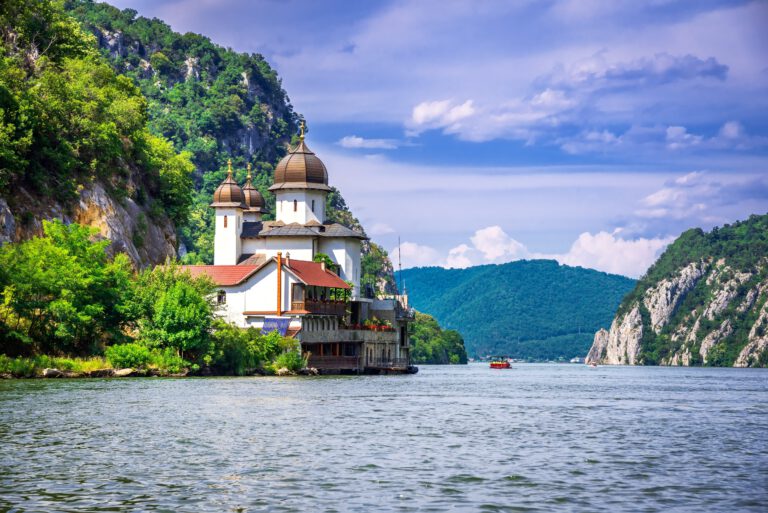
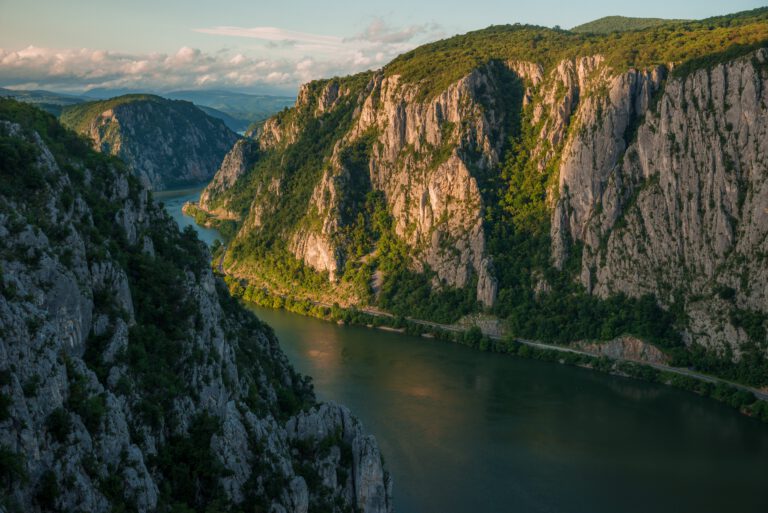
From Viminacium, the road follows the Danube east toward the gorge. The landscape changes as the river narrows and the mountains close in from both sides. Golubac Fortress appears suddenly on a rocky promontory above the water — nine towers built in the 14th century, fought over by Serbs, Ottomans, and Hungarians for over a century. It marks the entrance to the Đerdap — the Iron Gates gorge, one of the most dramatic stretches of river in all of Europe. Recently restored and fully open, Golubac is now one of the best-presented medieval sites in the Balkans, and the view from the upper towers down the gorge with Romania on the opposite bank is genuinely spectacular.
Lunch is taken close to the fortress, where the Danube fish tradition runs deep. Carp, catfish, and perch prepared in the traditional Serbian river style are the local specialties.
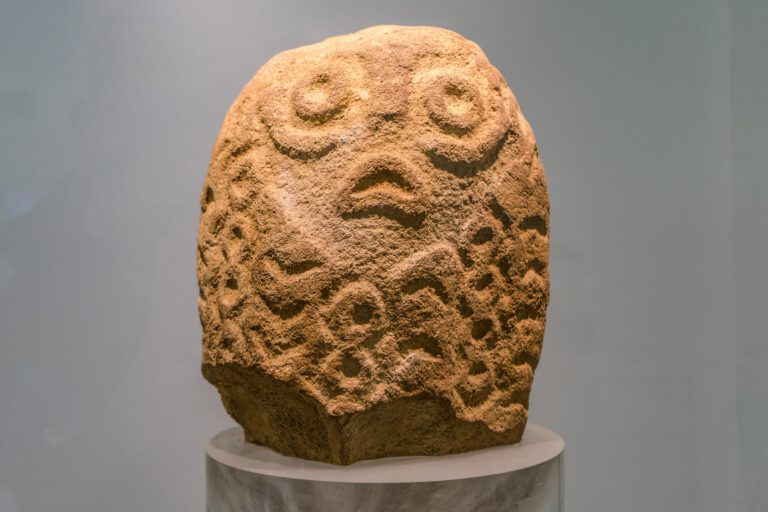
The final stop is Lepenski Vir — and it is the one that stays with you longest. This small Mesolithic settlement was occupied 9,500 years ago — before Stonehenge, before the Egyptian pyramids, before writing. The people who lived here produced stone sculptures of extraordinary refinement: trapezoidal faces carved from river boulders, part human, part fish, seemingly staring at the river. Nothing else like them has been found anywhere on earth. The site is fully enclosed and accessible, with the original foundations and sculptures in situ exactly where they were found.
Who Is This Tour For?
Ideal for history lovers, archaeology enthusiasts, and anyone genuinely curious about the deep history of Europe. Also well suited to travelers who have already seen Belgrade’s main sights and want to go deeper. The pace is steady — four substantial sites with drives between them — and suits adults and older children more than very young ones.
Why This Tour?
No other day trip from Belgrade covers this depth of historical time — from prehistoric Europe to the last medieval Serbian kingdom to Rome to the Danube frontier, all in one river corridor. Smederevo, Viminacium, Golubac, and Lepenski Vir are each individually among the most important sites in Serbia; combining all four in a single guided day with the context to make each one meaningful is something you cannot do independently without significant logistics.
- Group tour (5–16) operates with a confirmed minimum of 5 participants. If minimum is not reached, guests will be offered a full refund or transfer to a private tour.
- Free cancellation up to 24 hours before start time — full refund
- No refund for cancellations within 24 hours of start time