Resava Valley — Monasteries, Springs & Caves
Two Royal Monasteries, a Turquoise Spring & an Underground World — One Day East of Belgrade
- Journey east into the Resava Valley — visiting two of Serbia’s greatest medieval fortress monasteries, a turquoise spring rising from the earth, and one of the most impressive cave systems in the Balkans, all in a single day
- Ravanica and Manasija are the twin peaks of medieval Serbian architecture — fortress monasteries built by the last Serbian despots in the final decades before the Ottoman conquest, with frescoes and defensive walls that have survived six centuries
- Resavska Cave is a constant +7°C year-round — bring a warm layer and prepare for one of the most dramatic underground landscapes in Southeast Europe
Highlights
- Visit Ravanica Monastery — the fortified endowment of Prince Lazar, Serbia’s most revered medieval martyr
- Explore Manasija Monastery — the strongest fortress in medieval Serbia and seat of the Resava manuscript school
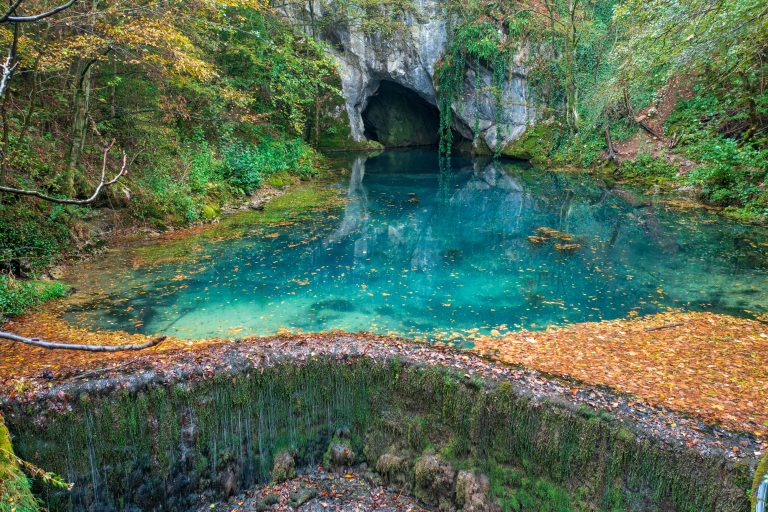
- Walk the pools of Krupajsko Vrelo — one of Serbia’s most beautiful karst springs
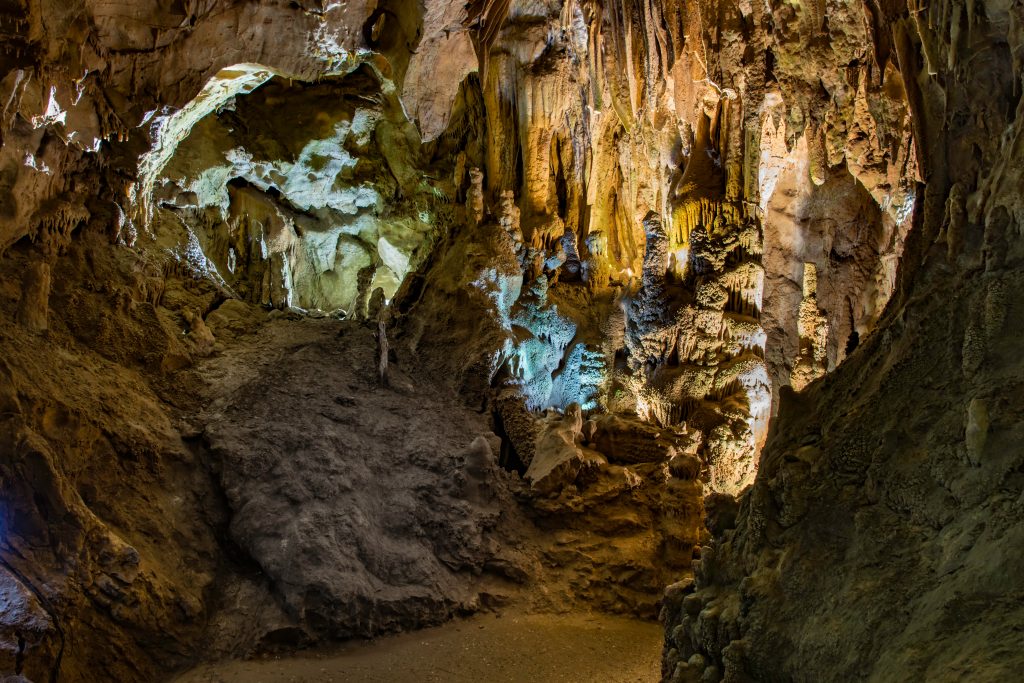
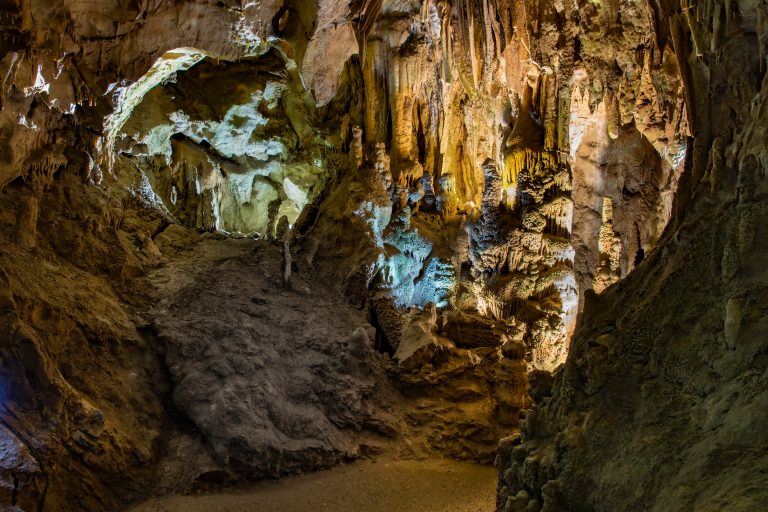
- Descend into Resavska Cave — 800 metres of stalactites, stalagmites, and underground chambers at +7°C
- Walk the pools of Krupajsko Vrelo — one of Serbia’s most beautiful karst springs
- Scenic drive through Gornjačka Klisura canyon on the return to Belgrade
- Lunch included in Despotovac town
- Small group format — private car for 1–4, minibus for 5–16
About This Tour
The Resava Valley east of Belgrade is one of the most rewarding day trips in Serbia — a compact corridor of medieval history, underground geology, and natural beauty that most visitors to the country never find. The East tour follows this valley from Belgrade through two of Serbia’s greatest fortress monasteries, a luminous karst spring, and one of the most impressive cave systems in the Balkans.
The day begins at Ravanica, the endowment of Prince Lazar — one of the most venerated rulers in Serbian history, who led the Serbian forces at the Battle of Kosovo in 1389 and was later canonised as a saint. Ravanica’s defensive walls and towers make it look more like a castle than a monastery, built in an era when Serbian lords knew the Ottoman storm was coming and fortified everything they could. The frescoes inside the Church of the Ascension represent the beginning of the late medieval Serbian style — a final, distinctive flowering of Serbian medieval painting.
Just fifteen minutes away, Manasija continues the story. Built by Prince Lazar’s son, Despot Stefan Lazarević, between 1407 and 1418, Manasija was the strongest fortress in medieval Serbia and the seat of the Resava School — a centre of manuscript copying and literacy that preserved Serbian culture through the darkest decades of Ottoman expansion. The frescoes here, though damaged, are among the finest of the late medieval Serbian school. Standing inside the walls, with eleven towers rising around the courtyard and the wooded hills of the Resava Valley beyond, it is easy to understand why this place mattered so much.
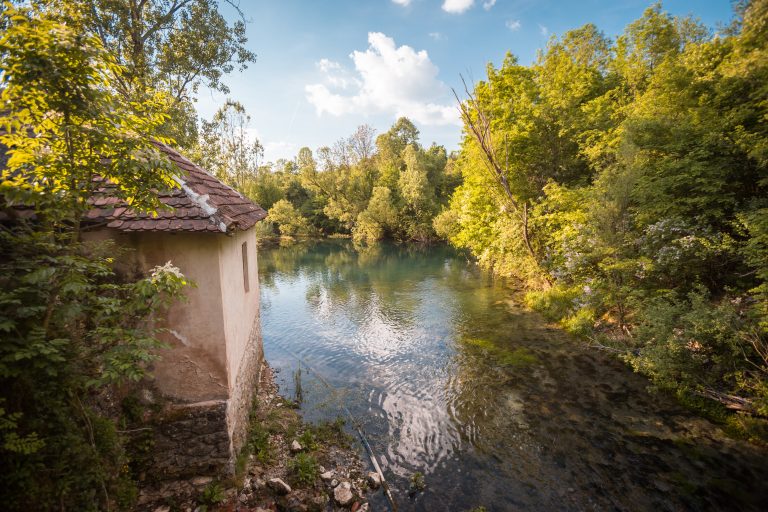
After lunch in Despotovac town, the tour continues to Krupajsko Vrelo — a karst spring of almost implausible beauty. Cold, clear water emerges from the base of a limestone cliff into turquoise pools surrounded by forest. The colour and clarity of the water against the white rock is one of the most striking natural scenes in central Serbia, and the short walk around the pools is one of the day’s most pleasant interludes.
Resavska Cave is a serious underground world — formed over millions of years in the limestone of the valley. The guided tour covers 800 metres of passages through chambers of extraordinary scale, stalactites hanging from vaulted ceilings, stalagmites rising from the floor, and cave curtains of translucent stone catching the light. The temperature inside is a constant +7°C — a warm layer is not optional.From the cave, the tour continues to Krupajsko Vrelo — the day’s most beautiful and peaceful stop. A large karst spring emerging from the base of a limestone cliff into turquoise pools surrounded by forest, the colour of the water against the white rock is one of the most photogenic natural scenes in central Serbia. The return to Belgrade passes through Gornjačka Klisura, a canyon of the Mlava River — a scenic finale before the drive home.
Time permitting on the return, a stop at the Natural History Center in Svilajnac adds geological and palaeontological context to the landscape the tour has been moving through all day.
Additional Information
What to Bring
A warm jacket or fleece is essential for Resavska Cave — the temperature inside is +7°C regardless of outside weather. Comfortable walking shoes with grip are recommended throughout, particularly for the cave and monastery grounds.
Dress Code
Modest clothing is required at both monasteries — shoulders and knees must be covered. Shawls are available on request. No dress restrictions apply at the spring or cave.
Cave Tour Schedule
Resavska Cave operates guided tours on fixed hourly schedules. The guide will coordinate the group’s arrival to align with the next available tour. In peak season, tours may be busier — the guide will handle all logistics.
Weather Policy
Tours run in all weather. Ravanica and Manasija are largely outdoor sites — in heavy rain the guide may shorten the exterior sections. Krupajsko Vrelo is most scenic in dry weather. Resavska Cave is fully sheltered and unaffected by weather.
Accessibility
Ravanica and Manasija involve walking on monastery grounds and cobblestone paths. Krupajsko Vrelo involves a short trail on uneven terrain. Resavska Cave involves walking on uneven cave paths and some low passages requiring ducking. Not suitable for wheelchairs or guests with significant mobility limitations.
Please Arrive
Please be at the meeting point 5–10 minutes before the 9:00 AM departure. The tour departs on time given the distances and the cave’s fixed tour schedule.
Climate & Best Time
This tour runs year-round. Spring and autumn are ideal for the monasteries and the spring. The cave is a constant +7°C in all seasons — actually more pleasant in summer when the contrast with outside heat is refreshing. Winter departures are atmospheric and uncrowded.
Who Is This Tour For?
Ideal for travelers with an interest in medieval history, Orthodox heritage, or natural landscapes — and anyone who wants to see Serbia beyond the obvious. The cave makes it particularly engaging for guests who have never been underground in a serious cave system. Suitable for most fitness levels; the cave requires walking on uneven paths and some ducking in lower passages. A good choice for solo travelers, couples, and small groups.
Why This Tour?
The Resava Valley is one of the most historically and naturally rich corridors in Serbia, and almost entirely overlooked by standard itineraries. This tour combines the two greatest fortress monasteries of the late medieval Serbian state, a spring of extraordinary natural beauty, and a cave system that ranks among the finest in Southeast Europe — all within a single coherent day that moves logically through the landscape. It is the best way to experience eastern Serbia without a car and without spending days on logistics.
- * Group tour (5–16) operates with a confirmed minimum of 5 participants. If minimum is not reached, guests will be offered a full refund or transfer to a private tour.
Inclusions & Exclusions
Pricing
Frequently Asked Questions
Guide, transport, guided visits at Ravanica and Manasija, lunch in Despotovac, Krupajsko Vrelo visit, and Resavska Cave guided tour with entrance fee.
Drinks beyond water at lunch, the optional Prirodnjački Centar stop, personal expenses, and tips.
Resavska Cave maintains a constant +7°C year-round. Even in the height of summer, the temperature drop is significant and the 1-hour tour inside will feel cold without a proper layer. This is not optional — please bring a jacket or fleece.
Approximately 5–6 km across the day. The monasteries involve walking on cobblestone and uneven grounds. Krupajsko Vrelo involves a short forest trail. The cave involves approximately 800 metres of underground walking on uneven paths with some low passages.
The main passages of Resavska Cave are large and well-lit — most guests with mild claustrophobia find it manageable. If you have severe claustrophobia, we recommend discussing this with us before booking.
Gornjačka Klisura is the canyon of the Mlava River, one of the most scenic stretches of road in central Serbia. The return to Belgrade passes through it as a natural drive-through — no stop needed, the scenery unfolds through the windows on the way home.
Yes — the cave in particular tends to make a strong impression on children. Both monasteries are accessible and engaging with the right guide. Children under 12 receive a 20% discount.
Yes. Private departures are available any day.
Not mandatory but always appreciated if you enjoyed the day.